Concrete Slab Foundation Cost by State (2026)
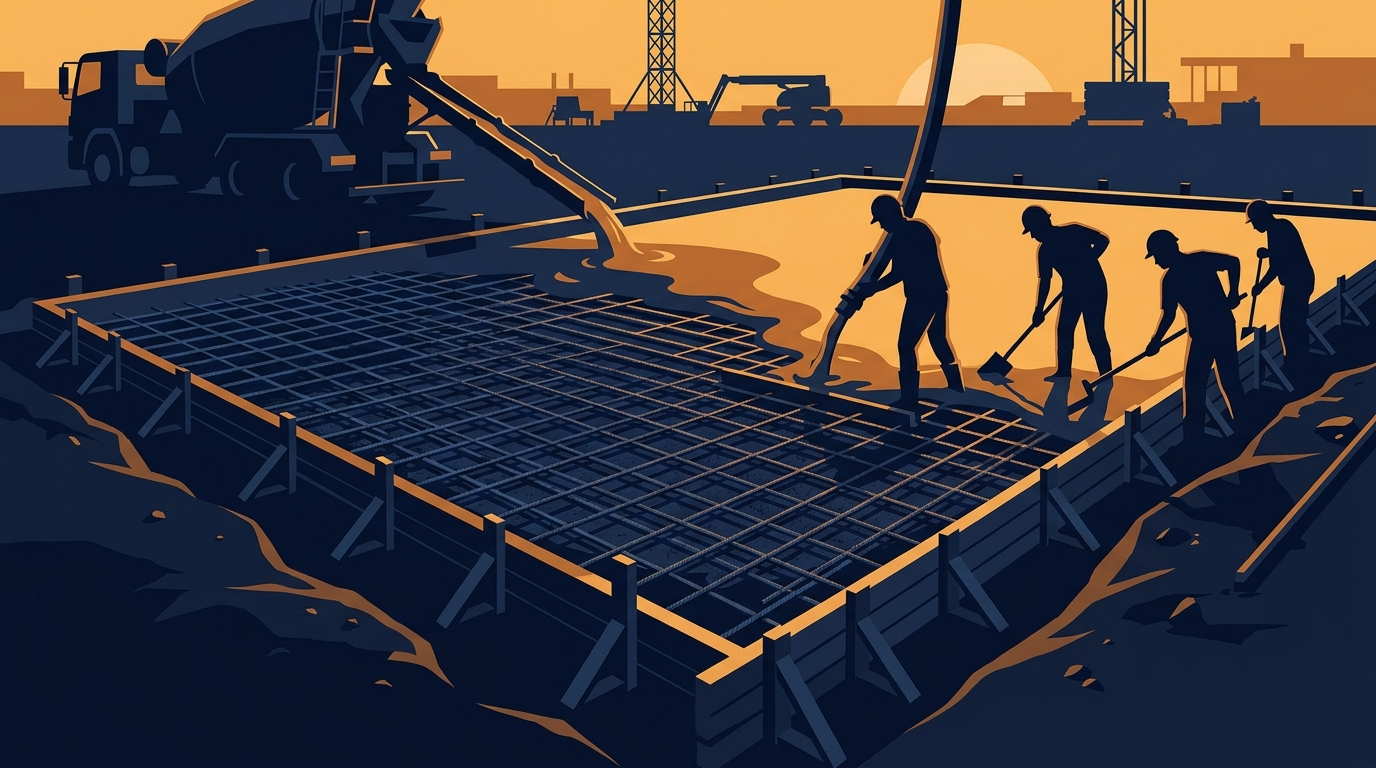
A concrete slab-on-grade is the cheapest residential foundation. For a typical 1,200 sq ft house footprint in 2026 you'll budget $6,000 to $15,000 for the slab, with a national midpoint around $8/sq ft installed. State-to-state spread is roughly 2× and mostly driven by ready-mix concrete prices and concrete-finishing labor.
Slabs are the southern foundation default — Florida, Texas, Arizona, and the Gulf Coast use them almost universally because the frost line is shallow and the soil works well. In the Northeast and Midwest, slabs are common for accessory buildings (garages, sheds, additions) but full basements still dominate primary home foundations because the frost line is deep enough that you're excavating anyway.
Where it's cheapest, where it's most expensive
Cheapest 4 states
- Mississippi · $5,400–$12,700
- Arkansas · $5,600–$13,200
- West Virginia · $5,600–$13,200
- Indiana · $5,800–$13,600
Most expensive 4 states
- California · $13,700–$32,100
- Hawaii · $12,900–$30,200
- New York · $11,300–$26,500
- Alaska · $11,300–$26,500
2026 concrete slab cost by state
| State | Total cost (1,200 sq ft) | Per sq ft |
|---|---|---|
| Northeast | ||
| Connecticut | $9,700–$22,900 | $8.35–$17.97 |
| Maine | $8,700–$20,400 | $7.45–$16.04 |
| Massachusetts | $10,800–$25,300 | $9.25–$19.90 |
| New Hampshire | $9,200–$21,500 | $7.87–$16.93 |
| New Jersey | $10,000–$23,400 | $8.56–$18.41 |
| New York | $11,300–$26,500 | $9.66–$20.79 |
| Pennsylvania | $7,600–$18,000 | $6.56–$14.11 |
| Rhode Island | $9,600–$22,500 | $8.21–$17.67 |
| Vermont | $9,200–$21,500 | $7.87–$16.93 |
| Midwest | ||
| Illinois | $7,400–$17,400 | $6.35–$13.66 |
| Indiana | $5,800–$13,600 | $4.97–$10.69 |
| Iowa | $6,300–$14,700 | $5.38–$11.58 |
| Kansas | $6,100–$14,400 | $5.24–$11.29 |
| Michigan | $6,500–$15,300 | $5.59–$12.03 |
| Minnesota | $7,600–$18,000 | $6.56–$14.11 |
| Missouri | $6,200–$14,600 | $5.31–$11.43 |
| Nebraska | $6,400–$14,900 | $5.45–$11.73 |
| North Dakota | $7,200–$16,800 | $6.14–$13.22 |
| Ohio | $6,300–$14,700 | $5.38–$11.58 |
| South Dakota | $6,700–$15,700 | $5.73–$12.33 |
| Wisconsin | $7,200–$16,800 | $6.14–$13.22 |
| South | ||
| Alabama | $6,000–$14,000 | $5.11–$10.99 |
| Arkansas | $5,600–$13,200 | $4.83–$10.40 |
| Delaware | $8,200–$19,300 | $7.04–$15.15 |
| Florida | $7,200–$17,000 | $6.21–$13.37 |
| Georgia | $6,400–$15,100 | $5.52–$11.88 |
| Kentucky | $6,000–$14,200 | $5.17–$11.14 |
| Louisiana | $6,400–$15,100 | $5.52–$11.88 |
| Maryland | $8,600–$20,200 | $7.38–$15.89 |
| Mississippi | $5,400–$12,700 | $4.62–$9.95 |
| North Carolina | $6,300–$14,700 | $5.38–$11.58 |
| Oklahoma | $6,000–$14,000 | $5.11–$10.99 |
| South Carolina | $6,200–$14,600 | $5.31–$11.43 |
| Tennessee | $6,000–$14,200 | $5.17–$11.14 |
| Texas | $6,900–$16,300 | $5.93–$12.77 |
| Virginia | $7,400–$17,400 | $6.35–$13.66 |
| West Virginia | $5,600–$13,200 | $4.83–$10.40 |
| West | ||
| Alaska | $11,300–$26,500 | $9.66–$20.79 |
| Arizona | $8,100–$18,900 | $6.90–$14.85 |
| California | $13,700–$32,100 | $11.73–$25.25 |
| Colorado | $9,600–$22,500 | $8.21–$17.67 |
| Hawaii | $12,900–$30,200 | $11.04–$23.76 |
| Idaho | $7,900–$18,500 | $6.76–$14.55 |
| Montana | $8,300–$19,500 | $7.11–$15.30 |
| Nevada | $8,300–$19,500 | $7.11–$15.30 |
| New Mexico | $7,200–$17,000 | $6.21–$13.37 |
| Oregon | $9,200–$21,500 | $7.87–$16.93 |
| Utah | $8,500–$20,000 | $7.31–$15.74 |
| Washington | $10,100–$23,800 | $8.69–$18.71 |
| Wyoming | $8,100–$18,900 | $6.90–$14.85 |
Methodology: ranges are state-cost-adjusted from a national trade baseline and reflect typical contractor direct cost (labor + materials, before overhead). Use them for feasibility-grade scoping, not as a binding quote. For a project-specific estimate, generate one free in under 60 seconds.
What moves slab cost
Frost line depth. A slab in Florida sits on 4–6 inches of compacted gravel and a thickened perimeter footing 18 inches deep. The same scope in Minnesota needs footings 48–60 inches deep to get below frost, which doubles the excavation and concrete in the perimeter alone. That's the biggest single regional cost driver.
Concrete strength and thickness. Residential standard is 3,000–4,000 psi, 4 inches thick. Garage slabs and shop floors go 5 inches at 4,000+ psi. Seismic zones (Pacific states) often require 6 inches at 4,500 psi with additional rebar. Each inch of thickness adds about $1.50/sq ft.
Vapor barrier and insulation. Code now requires a 10-mil polyethylene vapor barrier under the slab. Many cold- climate jurisdictions also require R-10 rigid foam under the perimeter or full slab — see our climate zone cost impact guide for the zone-by-zone requirements. Sub-slab foam adds $1.50–$3.50/sq ft.
Finishing tier. A broom finish (rough) is included in the base price. Smooth troweled finish for an exposed floor adds $1–$2/sq ft. Stained or polished concrete (now the dominant finish for modern residential) adds $4–$10/sq ft for the final polish. Decorative stamped concrete is $12–$25/sq ft additional.
Site conditions. A flat, accessible lot with the truck able to reach within 50 feet of the pour is the base price. Add $1,500–$5,000 for sites with significant slope, rock, or required pumping of concrete over 100+ feet. Coastal flood zones may require an elevated slab on piers, which doubles the cost.
Frequently asked questions
How long does a concrete slab take?
Slab vs crawlspace vs basement — which is cheapest?
Should I use post-tension or rebar?
Can a slab be done in winter?
Does the slab cost include the concrete pad for an HVAC unit or hot water heater?
Generate a foundation estimate
Generate a free CostKit estimate for your foundation — footprint, slab thickness, insulation tier, site conditions — and get a phase-by-phase breakdown calibrated to your state and frost zone.
Related
The cost ranges above are state-level averages. Three things move the number for a specific project: the local labor market right now (see permit activity and labor demand), the climate zone you're building in (see climate zone cost impact), and whether the address sits in a hurricane, flood, or seismic overlay (see coastal construction overhead).
For broader benchmarks, see our cost per square foot by state breakdown and construction labor rates by state guide.