Why Local Permit Activity Should Be on Your Bid Sheet
A framer in Phoenix bills $48/hour in a hot quarter and $36/hour in a soft one. Same framer, same skill, same truck — only the market changed. If you're estimating with last year's labor rates, you're either leaving money on the table or you've bid yourself into losing the job.
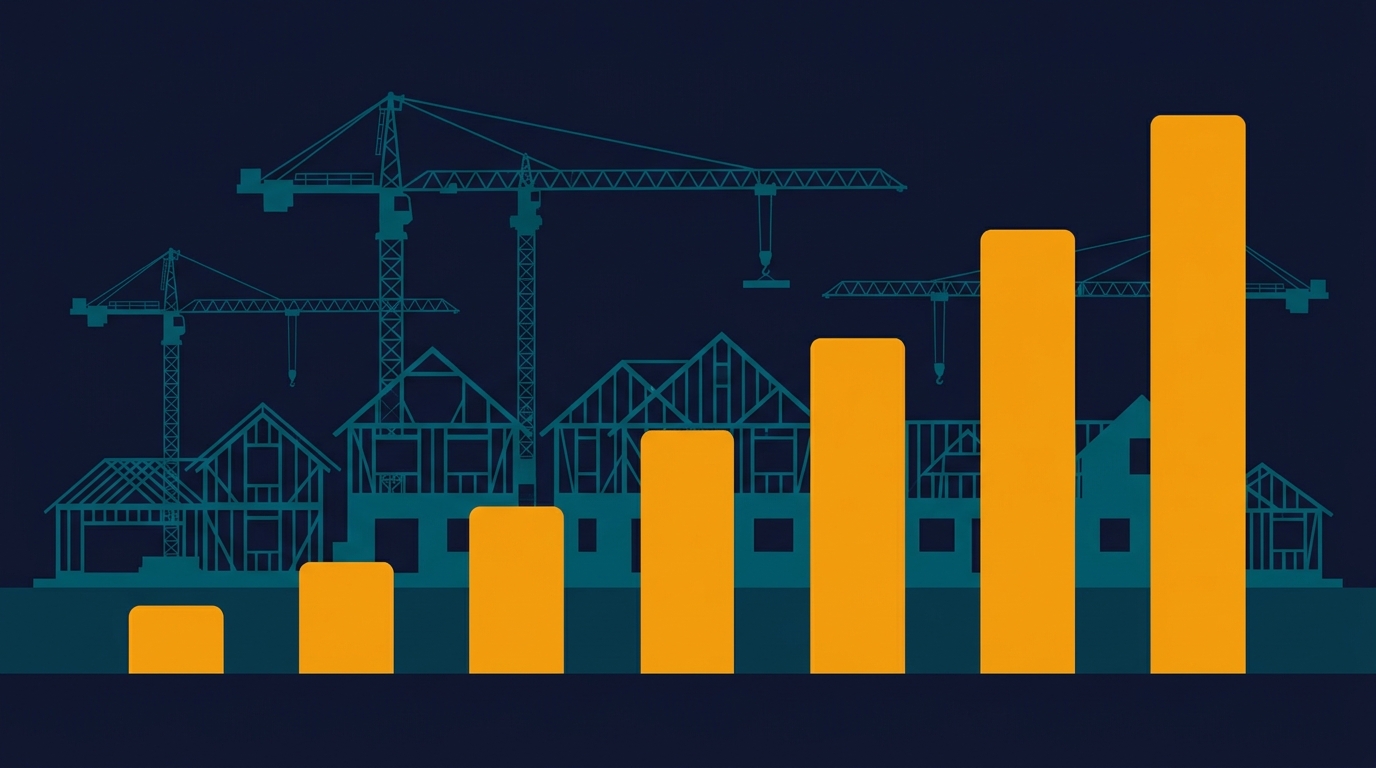
The cleanest leading indicator of trade labor rates in any given metro is residential building permit volume — the count of new single-family and multi-family permits a jurisdiction pulled last month. When permits trend up, sub crews get booked solid, callbacks slow down, and rates drift upward. When permits trend down, the same crews start returning phone calls and discounting weekend hours.
Why permits move trade rates (not the other way around)
Building permits are pulled at the start of a project — before excavation, before framing, before the rough trades show up. The lag from permit to mechanical rough-in is typically 4 to 10 weeks for a residential project. So this month's permit count predicts this fall's demand for plumbers, electricians, and HVAC techs.
Sub crews look at their booked workload three to six months out. When the pipeline is full, they raise rates on new bids. When the pipeline thins, they hold rates and start competing on price. Permits are the publicly available signal of that pipeline.
A useful rule of thumb: when the trailing 3-month residential permit count for a metro is 15%+ above the trailing 12-month rate, expect trade labor rates at the top of the typical regional range. 15%+ below, expect the bottom. CostKit watches this signal automatically for every estimate.
What the signal looks like in practice
As of the most recent Census Building Permits Survey data, the regional split tells a clear story:
- Hot markets: California, New York, North Carolina — last quarter's permit pace running 15–30% above the 9-month average. Expect plumbers and electricians to be booked out 6+ weeks.
- Cooling markets: Massachusetts, parts of Pacific Northwest — permits trending down 15%+. Subs returning calls same day, willing to negotiate.
- Steady markets: Texas, Florida, Georgia, Arizona — volume high in absolute terms but flat versus prior period. Rates at typical regional benchmarks.
How to use it on your next bid
If your market is hot
Bid your typical labor rate +10–15% for specialty trades (plumbing, electrical, HVAC). General labor and framing tend to move less. Build in a longer schedule — if subs are 6 weeks out, your “8-week bathroom” is really 14 weeks. Tell the client upfront; they'll respect the honesty more than they'll punish the timeline.
If your market is soft
Hold your published rate but offer a quiet discount to subs in exchange for first refusal on the next 60 days of work. Stockpile material if you have the cash — supplier rebates are usually negotiable in soft cycles. And bid aggressively on jobs you actually want; competitors are doing the same.
If you bid across markets
Don't carry one set of labor rates. A union electrician in San Francisco is $95–$115/hour all-in; the same trade in Tulsa is $48–$62/hour. The gap isn't just cost of living — it's local demand, prevailing wage rules, and which trades are scarce in that market.
Where to get the data
The Census Bureau publishes the Building Permits Survey monthly, broken down by Core-Based Statistical Area (CBSA). The CSVs are public, free, and updated about 30 days after the close of each month. The dataset goes back to 1980 if you want to look at multi-year trends.
For trade-specific wage benchmarks, the BLS Occupational Employment and Wage Statistics publishes median and 75th-percentile wages by state and metro for every construction trade. Combine permit trend (demand signal) with OEWS (current wage anchor) and you have a defensible labor rate for any project anywhere in the country.
How CostKit handles this
Every estimate is regionally adjusted using a combination of OEWS wage data and the trailing permit-volume trend for the project's metro. When the trend flips hot, the AI surfaces it in the system context so the generated estimate reflects current market pressure rather than last year's averages. You can see this play out by generating the same project in two different states — for example a $30,000 bathroom remodel in California (hot) and in Ohio (cooling). The labor lines move; the materials don't.
For more on regional adjustments that quietly drive estimate accuracy, see our climate zone post and the hurricane and flood zone post.