Flooring Cost · North Carolina
Flooring Cost in North Carolina (2026)
Flooring in North Carolina typically runs $5,400–$16,800 for a typical 1,500 sq ft of finished flooring (LVP or engineered hardwood, mid-tier material). That works out to roughly $3.59–$14.74 per sq ft installed.
North Carolina context that moves flooring installation cost
Climate: Varies from coastal subtropical (Outer Banks) to mountain continental (Asheville). Hurricane risk on the coast. Moderate winters in the Piedmont.
Labor market: Below national average.
Permits & codes: North Carolina follows the NC State Building Code based on the IRC. The state has statewide code enforcement through local inspection departments. Coastal areas have additional wind-resistance requirements. The state requires energy code compliance and has radon-resistant construction requirements in some counties.
About flooring installation in North Carolina
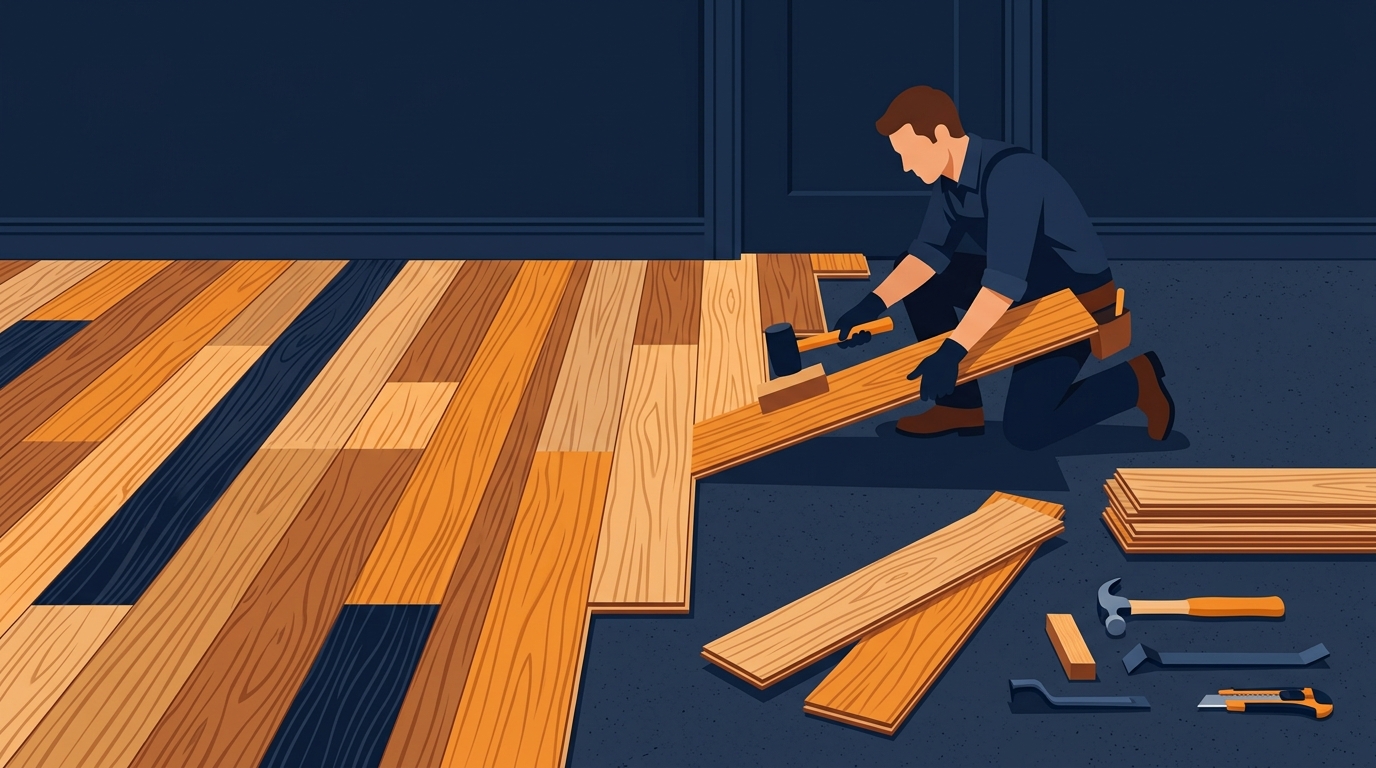
Residential flooring covers tear-out of the existing floor (if any), prep of the subfloor, installation of the new material, transitions, and baseboards/quarter round trim. For a typical 1,500 sq ft area of living space, that's a 3–7 day job depending on material and complexity.
LVP (luxury vinyl plank) has overtaken hardwood as the most-installed residential flooring in 2025–2026. It looks like wood, handles moisture better than wood, costs 30–50% less than hardwood, and installs quickly with click-lock systems. Hardwood and engineered hardwood are still preferred in higher-end remodels and traditional homes; tile dominates wet areas.
What moves the price
Material choice
LVP: $3–$7/sq ft installed for mid-tier; $7–$12 for premium. Engineered hardwood: $8–$15. Solid hardwood: $10–$22. Porcelain or ceramic tile: $10–$25 (labor intensive). Refinishing existing hardwood: $4–$8/sq ft. Carpet: $4–$8 for the carpet, $1–$2 for pad and labor.
Subfloor prep
An existing flat, clean subfloor is the base price. Uneven subfloor: add $1–$3/sq ft for leveling compound. Removing old tile or glued-down wood: add $1.50–$3/sq ft. Moisture issues: figure $1,500–$4,000 for moisture barrier and remediation before any new flooring can be installed.
Transition complexity
A simple rectangular room is the cheapest install. Multiple rooms with thresholds, angles, custom borders, or different-direction patterns add 15–35% in labor. Stairs are the most labor-intensive — $40–$100 per step for hardwood, $25–$60 for LVP.
Pad and underlayment
LVP usually comes with attached pad. Engineered hardwood needs a 3–6mm acoustic underlayment ($0.50–$1.00/sq ft). Carpet pad: $0.40–$1.20/sq ft for 8-pound rebond standard pad; memory foam adds another $0.50/sq ft. Tile needs a cement backer board on wood subfloors: $1.50–$3.00/sq ft installed.
Moisture and climate
Solid hardwood requires 6–8% moisture content in the wood and a stable indoor environment. In humid or coastal climates, engineered hardwood or LVP is the safer choice — solid hardwood cups, gaps, or buckles when humidity swings 30%+. Tile is the most moisture-tolerant; cork and bamboo are middle ground.
Demolition and disposal
Carpet pull and pad disposal: $0.50–$1.00/sq ft. Old hardwood removal: $1.50–$3.00/sq ft. Tile demo with thinset removal: $2–$4/sq ft and the slowest tear-out by far. Disposal fees vary by jurisdiction and material.
Flooring cost across North Carolina metros
Within North Carolina the spread between metros is usually 25–40% of the state midpoint. Major metros pay more than rural areas because of labor demand, permit complexity, and material delivery overhead.
- Charlotte — typical home build $140–$320/sq ft range
- Raleigh / Durham (Triangle) — typical home build $140–$310/sq ft range
- Asheville — typical home build $155–$350/sq ft range
- Wilmington — typical home build $135–$300/sq ft range
- Greensboro / Winston-Salem — typical home build $120–$270/sq ft range
Frequently asked questions
How much does flooring installation cost in North Carolina?
LVP vs hardwood in North Carolina?
How long does flooring installation take?
Can I install LVP myself in North Carolina?
When should I refinish existing hardwood instead of replacing?
Get a North Carolina-specific Flooring estimate
CostKit's AI pulls North Carolina labor rates, regional material prices, and code-driven requirements automatically — a full phase-by-phase estimate in under 60 seconds. No account required.
For contractors
Estimating North Carolina Flooring jobs regularly? These compare options and show how to turn these numbers into client-ready bids:
Related
For broader benchmarks across North Carolina, see the cost to build a house in North Carolina.
Other trade costs for North Carolina: